Hisarönü Driving Tips for Visitors
Turkey drives on the right, and a 2026 traffic-law update removed the old speed tolerance and raised fines significantly.
Compare Car Rental DealsSearch & Compare Car Rental Deals
Free cancellation on most vehicles
Turkish Road Rules for Tourists
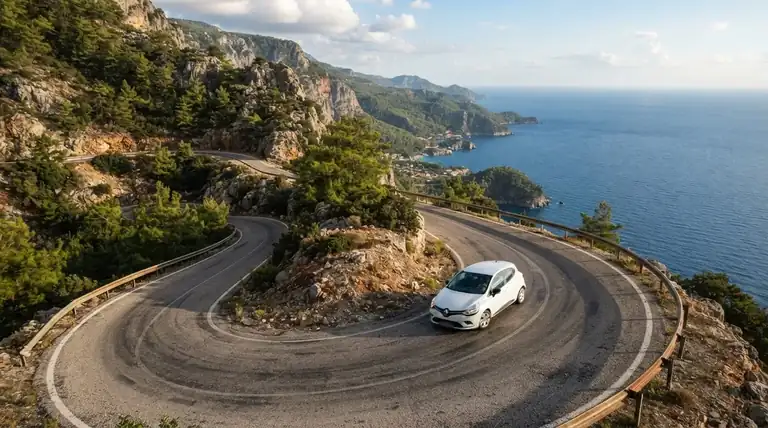
Turkey drives on the right, and the D400 through this area functions as a divided highway or ordinary rural road rather than a full motorway, so posted limits vary by stretch. Car speed limits are broadly consistent nationwide, though local signage always takes precedence over the general rule.
| Road type | Car limit |
|---|---|
| Urban / built-up areas | 50 km/h |
| Rural two-way roads | 90 km/h |
| Divided highways | 110 km/h |
| Motorways (otoyol) | 120-130 km/h |
Belts, children and phones
- Seatbelts are compulsory for every occupant, front and rear
- Children under roughly 150 cm or 36 kg need an appropriate child restraint
- Children under about 10 years old may not ride in the front seat
- Handheld phone use is prohibited; hands-free only
- Headlights must be switched on inside tunnels
Most visitors collect their car near Dalaman Airport to Hisaronu transfer routes, where the D400 speed changes are well signposted but easy to miss on the first drive after a long flight.
Speed Cameras and 2026 Fines
Under Turkey's 2026 traffic-law update, widely reported as effective from late February 2026, authorities removed the old roughly 10% speed tolerance that previously gave drivers a small buffer over the posted limit, and raised fine amounts across the board. The top speeding tier is now reported at up to 30,000 TL, though as of mid-2026 exact fine amounts remain volatile and worth confirming before you travel.
Fixed and mobile speed cameras are common on Turkish highways, and the Dalaman-Göcek stretch of the D400 is specifically known for enforcement. A speeding or toll fine issued to a rental car is billed to the company first, then charged to your card, often weeks later and with an added admin fee — so treat every camera warning sign on this stretch as a real one.
Practical habits that help
- Set cruise control or watch the speedometer closely near Göcek and Dalaman
- Assume no tolerance above the posted limit under the current rules
- Keep a photo of the rental agreement's plate number in case a fine notice arrives later
The Roads Around Hisarönü
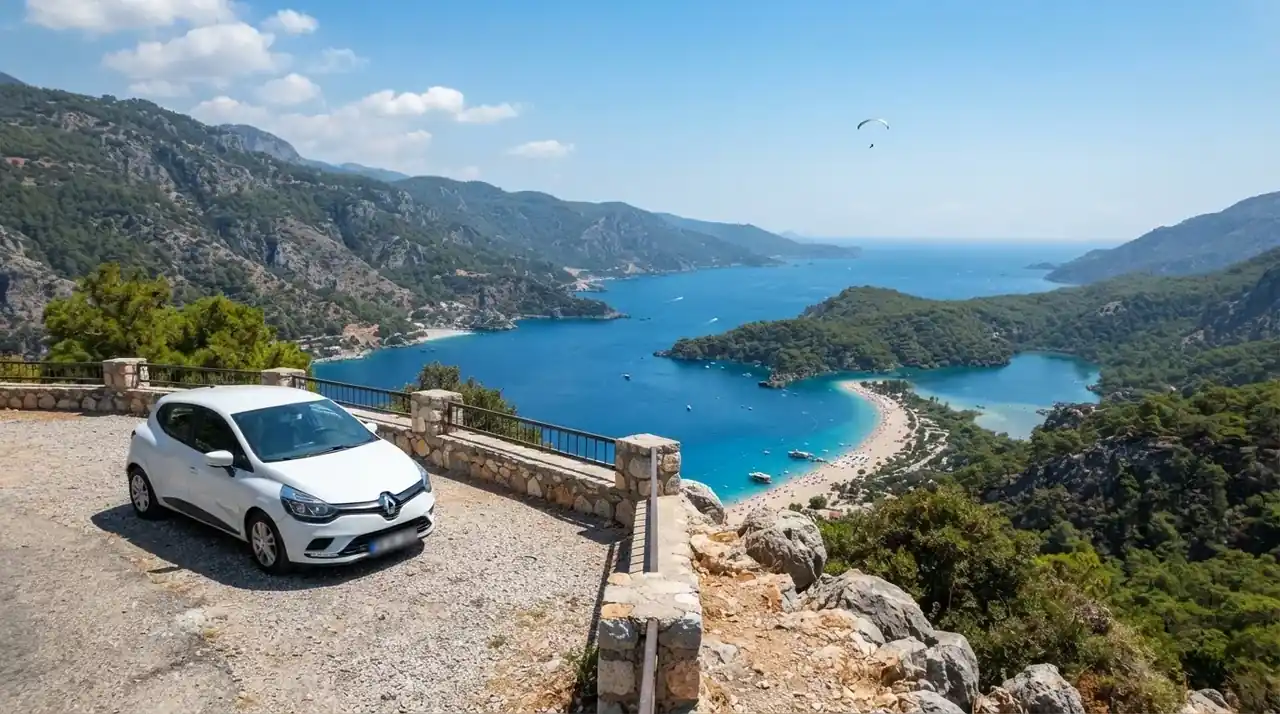
The descent from Hisarönü down to Ölüdeniz is short, about 4 km, but steep and hairpinned, with foot traffic along the shoulder in summer. Drop into a low gear near the top and let engine braking carry most of the descent rather than riding the brakes the whole way — sustained braking on a hot day is a common cause of brake fade on this hill. For parking and lagoon-side logistics once you reach the bottom, see Oludeniz car rental details.
Faralya and Kabak
The coastal road toward Faralya and Kabak is narrow, winding and runs along a cliff edge for long stretches. A standard rental car typically manages the drive to Faralya and the car park above Kabak village without trouble, but the final steep track down to Kabak beach itself is a different matter.
- Leave the final descent to Kabak beach to a local 4x4 shuttle, or walk it
- Driving that unpaved final stretch usually voids the rental's insurance cover entirely
- Both routes feature on this list of best day trips, with notes on timing and what to expect on arrival
For the fuller rundown, see this list of best day trips from Hisaronu before planning either drive.
Fuel, Tolls and Paying at the Pump
Turkish fuel stations are typically full-service: an attendant pumps the fuel and takes payment, rather than self-service at the pump. As of mid-2026, unleaded 95 runs around 64 TRY per litre and diesel around 66 TRY per litre in Muğla province, though these figures move with global oil prices and local tax changes, so treat them as a rough guide rather than a quote.
- Cards and contactless payment are widely accepted, though carrying some cash in lira is still sensible
- The Göcek Tunnel toll (75 TL as of mid-2026) is usually collected automatically via an HGS electronic tag pre-fitted to most rental cars
- HGS and other toll charges are billed back through the rental company's account after drop-off, not paid in cash at the tunnel
- Ask the pickup agent to confirm the HGS tag is active before you leave the lot
If You Have an Accident
Most rental periods in this area pass without incident, but the steps below matter if something does go wrong, since skipping the official report can void your insurance cover entirely.
- Put on the hi-vis vest and set out the warning triangle so oncoming traffic can see you
- Do not move either vehicle if anyone is injured
- Photograph the scene, the vehicles and any visible damage from multiple angles
- Call the police (155) or, outside urban areas, the jandarma (156) to get an official report
- Expect a standard alcohol test as part of the police response
- Call 112 for any medical emergency, or 154 for the traffic police if the general lines are unclear on jurisdiction
For the coast guard along Ölüdeniz and the wider bay, the number is 158. Before you even collect the keys, compare rental cars that include comprehensive cover, or head back to our Hisarönü car rental guide if you still need to book.
Frequently Asked Questions
What are the speed limits in Turkey?
What is the drink-drive limit?
Do I need to worry about speed cameras?
Who pays a traffic fine on a rental car?
Is the road down to Ölüdeniz dangerous?
Ready to compare car rental deals in Hisaronu?
Check live prices and availability from local and international suppliers.
Compare car rental deals